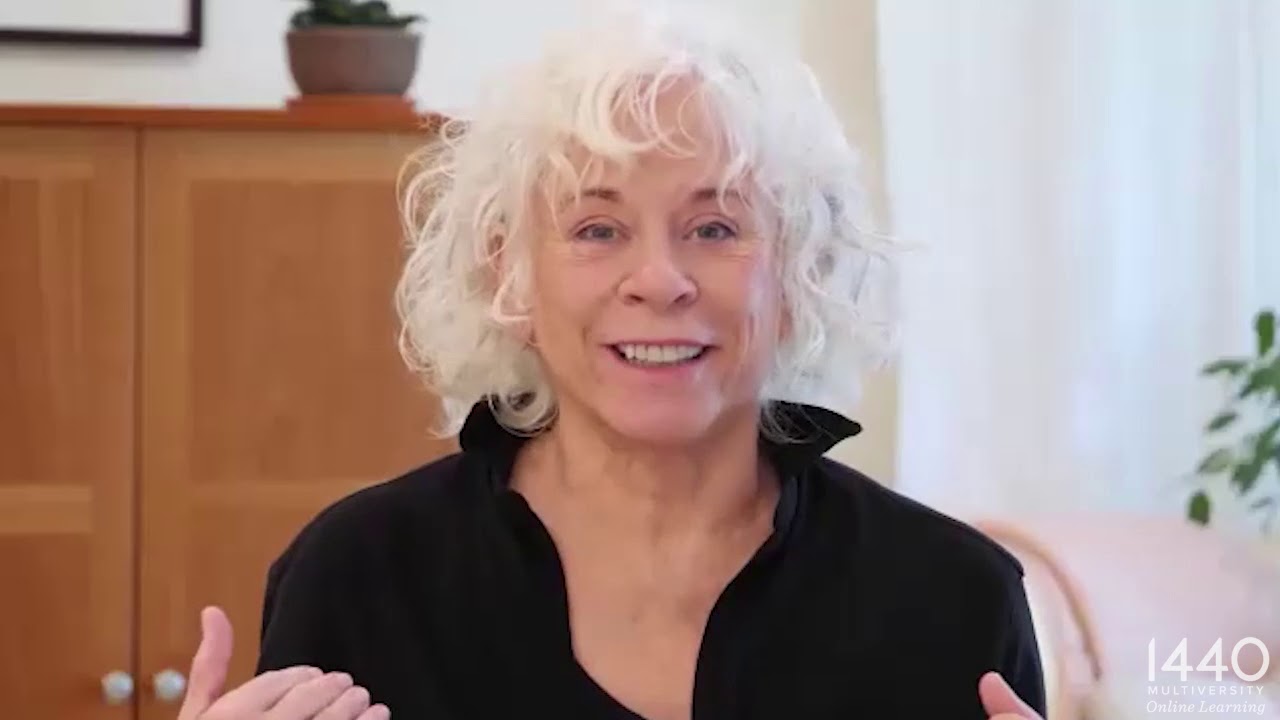
Scott Kriens, co-founder of 1440 Multiversity, opens with a simple but urgent observation: our education system has largely abandoned the inner life. We've built extraordinary institutional machinery to train minds in science, engineering, and mathematics, yet we've invested almost nothing in teaching people about their own emotional, relational, and spiritual capacities. The paradox is stark—the skills we're leaving untaught are the ones that matter most in living a meaningful life.
That gap is what 1440 exists to fill. The name itself carries intention: 1440 is the number of minutes in a day, a daily reminder to show up and be fully present to who you actually are. The invitation Kriens extends is deceptively simple: invest in yourself. Not your résumé, not your portfolio, but the whole of you—the heart, the spirit, the soul. In an age of relentless specialization and instrumental self-improvement, this approach feels almost radical.
Why Whole-Self Learning Matters
The founding premise rests on a conviction that relationships and emotional/relational capacity are the most important dimensions of a human life. Yet conventional education has left these territories almost entirely unmapped. A person can graduate from elite institutions with a sophisticated understanding of thermodynamics or corporate finance and still struggle with genuine self-knowledge, emotional regulation, or the ability to show up authentically in relationships. Kriens's diagnosis is that this imbalance isn't accidental—it reflects institutional priorities that treat the emotional and relational self as ancillary to the intellectual self.
1440 Multiversity operates from the opposite premise: that learning happens most profoundly when the whole person is engaged. That emotional resilience, social awareness, and spiritual grounding aren't luxuries or supplements to "real" education—they're foundational.
The Physical Campus as Teaching Tool
The 75-acre Santa Cruz Mountains property isn't merely a venue; it's part of the pedagogy. Kriens describes the campus architecture as "purpose-built" for varied teaching styles: intimate outdoor classrooms nestled among the redwoods, amphitheaters for larger dialogues, and an auditorium that seats over 700 for major programs. The design assumes that learning environments shape learning outcomes—that there's a qualitative difference between absorbing ideas in a windowless conference room and absorbing them under open sky.
The campus can house 385 guests, with overflow accommodation in nearby facilities, and serves audiences drawn significantly from Silicon Valley and the broader Bay Area. Geographically, it sits about 30 minutes from San Jose airport and an easy drive to San Francisco—close enough to the world of rapid iteration and high stakes to make the 1440 experience feel like genuine reprieve, yet connected enough to that world's leadership to shape how technology and business leaders think about human development.
A Complete Ecosystem for Practice
Beyond the classrooms, the infrastructure reflects a holistic understanding of human need. A 22-room healing arts facility with an infinity tub. Four miles of walking trails through the redwoods—contemplative movement built into the landscape. Classes in yoga, meditation, Tai Chi, and Qi Gong aren't add-ons; they're woven into daily possibility. There's a fitness center for those who need to move their bodies. Two cafes for casual gathering.
The culinary program, anchored in what they call the Kitchen Table, deserves special mention. Menus change daily, rotating through varied cooking styles and working with seasonal, local ingredients—serving both lighter fare and heartier meals. Food becomes another teaching medium: attention to quality, seasonality, and the care that goes into nourishment. It's a small thing, but it signals that every dimension of the day is held with intention.
A Different Kind of Place
Kriens closes his invitation with a phrase that echoes through the transcript: "You'll find this is not like any place you've ever been. It's not like anything that you've ever done." That resistance to easy comparison is telling. 1440 Multiversity isn't trying to be better at what other educational institutions do. It's trying to answer a different question entirely: not "How do we make you more productive?" but "How do we help you know yourself more fully, and connect more authentically with others?"
The location in the heart of the redwood forest serves that inquiry well. The redwoods are ancient, still, massive—a living reminder of scale beyond the human, of time beyond our own lifespans. That environment naturally invites a certain slowness, a shift in perspective. It's not incidental that Kriens describes 1440 as "a place to slow down, pay attention and have rich experiences." Those three verbs—slow, attend, experience—are almost the opposite of what most high-performance environments demand. Yet they're precisely what most people who arrive at 1440 discover they're hungry for.
Where to go from here
If the invitation resonates—if you're curious about what it means to invest in all of yourself rather than fragments of yourself—1440 Multiversity offers a concrete way to explore that possibility. Visit 1440.org for information about programs and calendar. Or simply ask yourself: when was the last time you spent uninterrupted time in a trusted relational setting, focused on knowing yourself more fully? The answer to that question might be exactly why 1440 exists.