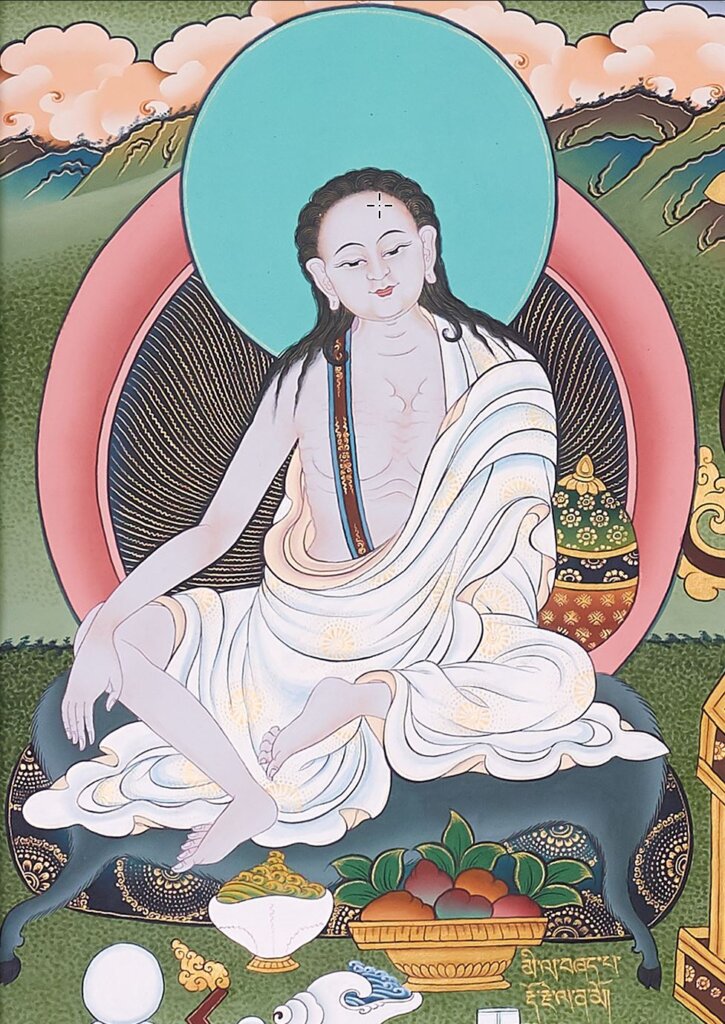
Milarepa's profound invitation to "Look within and find both" beckons us to explore the depths of our own being, urging us to seek the dualities that reside within ourselves. This call to introspection is not merely a suggestion; it is a vital practice for those on a spiritual path. In a world often preoccupied with external validation and distractions, Milarepa's words remind us that true understanding and integration come from turning our gaze inward, where both light and shadow coexist.
To look within is to embark on a journey of self-discovery that transcends superficiality. It is an invitation to embrace the entirety of our experience, acknowledging both our strengths and vulnerabilities. This duality is essential for wholeness; without recognizing the full spectrum of our inner landscape, we risk living fragmented lives. Milarepa's wisdom encourages us to confront our inner truths, fostering a deeper connection with ourselves and the world around us.
The image / the metaphor
The imagery in Milarepa's quote evokes a sense of exploration and discovery. The phrase "look within" suggests a journey into the depths of one's own consciousness, a place where thoughts, emotions, and experiences intertwine. The verb "find" implies an active engagement, a quest for understanding that requires both courage and curiosity. This metaphorical journey is not one of mere observation; it is an invitation to engage with the complexities of our inner world.
In the speaker's tradition
Milarepa, a revered figure in Tibetan Buddhism, embodies the principles of dharma and the transformative power of introspection. His teachings emphasize the importance of inner realization and the journey toward enlightenment. Concepts such as sunyata (emptiness) and prajna (wisdom) resonate deeply within his message, highlighting the necessity of understanding the nature of reality through personal experience. In this context, looking within becomes a pathway to recognizing the interconnectedness of all things and the illusion of separation.
In the "Songs of Milarepa," we find echoes of this teaching in his reflections on suffering and liberation. For instance, he often speaks of the need to confront one's own demons—both literal and metaphorical. This confrontation is not merely about acknowledging pain but about understanding its role in the larger tapestry of existence. By embracing both our light and shadow, we cultivate a profound wisdom that transcends duality, leading us toward a more authentic and compassionate way of being.
Living the teaching
Consider a modern scenario where Milarepa's teaching can be applied: a person grappling with feelings of inadequacy in their professional life. In this situation, the individual might feel overwhelmed by self-doubt while simultaneously possessing unique talents and strengths. By looking within, they can acknowledge both their insecurities and their capabilities, allowing for a more balanced perspective. This introspective practice can lead to greater self-acceptance and the courage to pursue their aspirations with authenticity.
In the realm of relationships, the teaching of looking within can be equally transformative. Imagine a couple facing conflict; each partner may feel justified in their grievances while overlooking their contributions to the discord. By turning inward, they can recognize their own vulnerabilities and patterns of behavior that contribute to the tension. This process of self-reflection fosters empathy and understanding, paving the way for deeper connection and healing. In both scenarios, the act of looking within becomes a catalyst for integration and wholeness.
A reflection
As we contemplate Milarepa's invitation to "look within and find both," we are called to consider the dualities present in our own lives. What aspects of ourselves have we neglected or denied? In what ways can we embrace the entirety of our being, acknowledging both our strengths and weaknesses? This reflective inquiry invites us to engage with our inner landscape, fostering a deeper sense of wholeness and integration.
