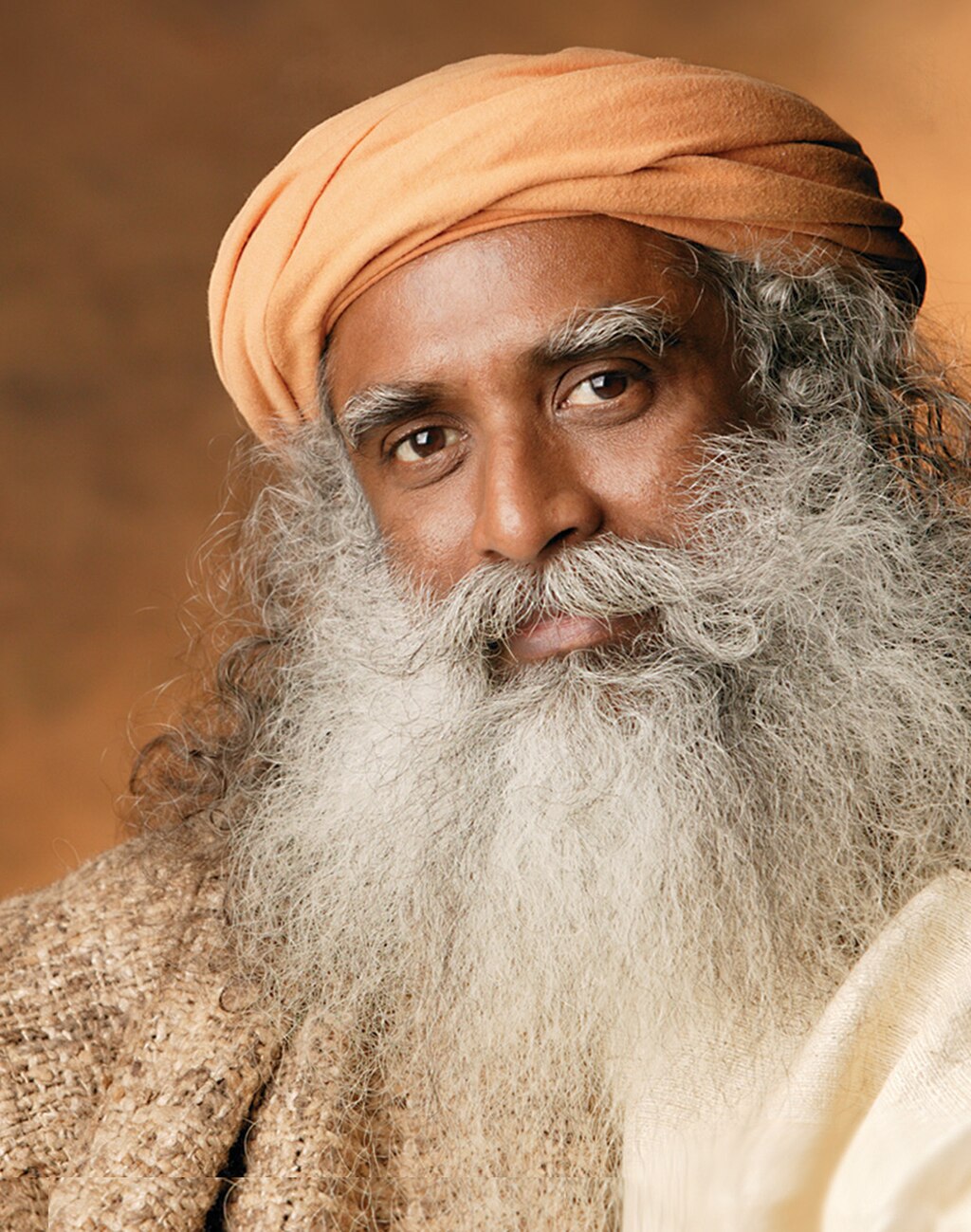
Sadhguru's assertion, "What you call freedom is freedom from yourself," invites us to reconsider our understanding of liberation. Often, we equate freedom with external circumstances—financial independence, social status, or the absence of constraints. However, Sadhguru challenges us to look inward, suggesting that true freedom lies in transcending the limitations imposed by our own identities, fears, and conditioned responses. This perspective is not merely philosophical; it has profound implications for how we navigate our lives and relationships.
In a world that constantly bombards us with messages about personal achievement and external validation, Sadhguru's words resonate as a call to introspection. The essence of this teaching lies in recognizing that our greatest obstacles often stem from within. By liberating ourselves from the shackles of our own making—our ego, our attachments, and our preconceived notions—we can experience a more profound sense of freedom. This journey inward is not just a personal endeavor; it is a collective awakening that can transform how we relate to ourselves and others.
The image / the metaphor
The imagery in Sadhguru's quote evokes a sense of duality between the self and the essence of freedom. The phrase "freedom from yourself" suggests an internal struggle, where the self—often perceived as a fixed identity—becomes the very source of our bondage. The verbs chosen here, particularly "call," imply that our understanding of freedom is subjective and shaped by our perceptions. This invites us to examine the narratives we construct about ourselves and the world around us.
Diving deeper into the metaphor, we can envision the self as a cage, intricately designed by our experiences, beliefs, and societal expectations. To be free from this cage is to dismantle the very structures that confine us. This dismantling is not an act of rebellion against oneself but rather an act of profound self-awareness and acceptance. It is an invitation to explore the layers of our identity and to recognize that beneath the surface lies a boundless essence waiting to be discovered.
In the speaker's tradition
Sadhguru's insights are deeply rooted in the ancient tradition of yoga, which emphasizes the importance of self-realization and inner freedom. Concepts such as dharma, or one's true path, and kenosis, the act of self-emptying, resonate with his message. In yoga philosophy, the journey toward liberation—moksha—is often depicted as a process of shedding the layers of the ego and realizing one's true nature, which is inherently free and unbounded. This aligns with the notion of sunyata, or emptiness, where freedom is found in the absence of attachment to the self.
In texts such as the Bhagavad Gita, the idea of transcending the self is echoed through the teachings of detachment and selfless action. Krishna advises Arjuna to act without attachment to the fruits of his labor, suggesting that true freedom comes from aligning with one's higher purpose rather than being ensnared by personal desires. This wisdom reinforces Sadhguru's assertion that liberation is an internal journey, one that requires us to look beyond our conditioned selves and embrace a more expansive understanding of existence.
Living the teaching
Consider a modern scenario where this teaching can be applied: a professional grappling with the pressures of success. In striving for external validation—climbing the corporate ladder, achieving accolades, or garnering social media followers—this individual may find themselves increasingly anxious and unfulfilled. By reflecting on Sadhguru's words, they might begin to recognize that their pursuit of freedom through external achievements is a mirage. Instead, they could explore what it means to be free from the relentless need for approval, allowing them to redefine success on their own terms.
In the realm of relationships, the teaching of freedom from oneself can manifest in the way we engage with others. Imagine a couple facing recurring conflicts rooted in their individual insecurities and past traumas. By embracing Sadhguru's perspective, they can begin to understand that their struggles are often reflections of their internal battles. This realization can foster compassion and empathy, allowing them to support each other in the journey of self-discovery rather than becoming adversaries in their quest for validation. In this way, the teaching becomes a pathway to deeper connection and understanding.
A reflection
As we contemplate Sadhguru's profound statement, we are invited to ask ourselves: What aspects of my identity are limiting my sense of freedom? This question encourages a deep exploration of the narratives we hold about ourselves and the ways in which they shape our experiences. By engaging with this inquiry, we can begin to peel back the layers of our conditioned selves, moving toward a more authentic expression of who we are and what it means to be truly free.